Libby Accidentally Drowns and Is Buried
The Girl on the TrainLibby Accidentally Drowns and Is Buried is the concealed bereavement at the centre of Megan Hipwell’s confession to Kamal Abdic. Megan describes her daughter’s death as an accident during a period of exhaustion and isolation, followed by a burial that she and Mac kept secret. The episode joins a private loss to years of guilt: Libby’s death is not only the event Megan has struggled to speak about, but the experience that shapes her persistent fear of being alone and her memory of Mac’s departure.
Pregnancy and Libby’s Early Life
Megan tells Kamal that she became pregnant but did not recognize the situation in time to end the pregnancy. She says that Libby was wanted by neither parent, and that she and Mac failed to acknowledge what was happening as the pregnancy progressed. Megan did not seek medical care, attend scans, or follow the advice she associated with pregnancy. She recalls that she continued to smoke and drink, and avoided medical attention in part because she could not face being lectured. Her account describes denial not as a single decision but as an ongoing failure to treat the pregnancy as real, even as her body and daily life changed.
Libby was born at home. Megan explains that hospitals were difficult for her because her previous hospital experience had been connected with the death of her brother, Ben Mills. She had also not attended scans, and a friend of Mac’s, who had nursing experience or training, came to help with the birth. Megan remembers Libby as small, with dark eyes and blonde hair, and says that the baby slept well and did not cry much. This recollection gives the later loss a particular weight: Megan describes an unexpectedly manageable beginning to motherhood before recounting the sudden accident that ended it.
The Bath and the Accident
The death occurred when Libby was only a few months old. Megan remembers that she and Mac had argued and that he left her alone for the first time since Libby’s birth. The house was cold, the roof leaked, and Megan was exhausted. She had been drinking in an attempt to warm herself, without relief, and decided to take a bath with Libby resting on her chest. Megan later identifies falling asleep as the decisive accident. When she became aware of what had happened, Libby was no longer on her chest but was trapped between Megan’s arm and the side of the bath, with her face beneath the water.
Megan’s account stresses how little she can reconstruct after waking. She recalls being on the bathroom floor with Libby in her arms when Mac returned and called for her from downstairs. He found them after coming upstairs and turning on the light. Megan remembers asking him to turn it off because she could not face looking at Libby. She then gave the baby to Mac and ran out of the house into the rain, eventually reaching the beach and dunes. She does not remember everything that followed. She recalls that Mac came to find her and took her home, but the gaps in her memory remain part of how she tells the event: the central fact is clear to her, while much of the aftermath is not.
Secret Burial and Mac’s Departure
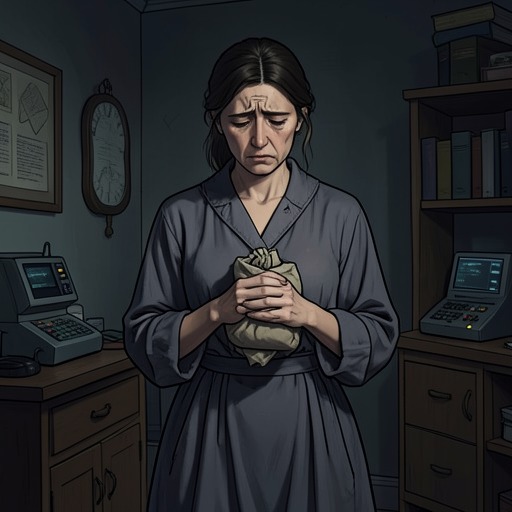
The next morning, Megan and Mac buried Libby. Megan wrapped the baby in a sheet, while Mac dug the grave at the edge of the property near a disused railway line. They placed stones over the grave as a marker. The burial gave Libby a resting place, but it also began a silence: Megan says that neither parent discussed what had happened, and they did not look at one another.
That night, Mac said he had to meet someone and left. Megan wondered whether he intended to go to the police, but she did not know what to do and waited for someone to arrive. Mac never returned. His departure followed immediately after the burial and left Megan alone with the loss and with uncertainty about what he might do. The account does not establish that he went to the police; it establishes Megan’s fear that he might, and the fact that he disappeared from her life instead. The unmarked-seeming secrecy of the burial, interrupted only by the stones, and Mac’s absence leave the event without a shared explanation or a lasting companion to the grief.
Confession and Lasting Consequences
Years later, Megan recounts the pregnancy, accident, and burial to Kamal in his living room. She has difficulty saying that she was pregnant and struggles to continue as she recalls the bath and Libby’s death. Kamal listens without condemning her, gives her time, and comforts her after she finishes describing the burial. His response matters to Megan because, for the first time in this account, another person knows what happened and does not treat her as a monster. The disclosure brings some relief, though it does not erase the memory or make her feel that the experience has passed.
Megan says that the event still troubles her at night. She remembers being alone in the house after Libby’s death, afraid to sleep, and believing she heard or sensed a presence there. Those experiences help explain why the burial and Mac’s departure remain inseparable in her recollection: the loss was followed by abandonment and by a prolonged period in which fear and guilt had no one to whom they could be spoken. The memory therefore returns not only as an account of how Libby died, but as an enduring condition of isolation that Megan has concealed from others.
Narrative Significance
The episode is presented as Megan’s remembered past, disclosed in stages rather than as an immediately complete account. Her first admission that she became pregnant opens onto the circumstances of the birth; the recollection then moves from her choice to take Libby into the bath to the waking discovery, the burial, and Mac’s departure. The gradual disclosure makes the act of telling part of the event’s significance: what had remained private is finally spoken aloud, while the uncertainties in Megan’s memory remain visible.
The accident also gives context to Megan’s unresolved guilt without suggesting that she intended Libby’s death. Megan’s account links her exhaustion, drinking, and decision to bathe with the baby to the fatal outcome, and she names falling asleep as what happened. The burial and silence that followed compounded that loss rather than resolving it. In the present, Kamal’s acceptance offers Megan a contrast to the isolation she remembers, but the continuing nighttime fear shows that confession is a beginning of disclosure, not a complete release from grief.